Return of Research Results
NIH is committed to making the return of research results to participants in NIH-funded clinical research standard practice. Returning research results to study participants enhances transparency, builds trust, shows respect for their contributions, and engages them as partners in research. OSP is leading the development of policies and supporting guidance materials to enable the research community to return research results responsibly to participants.
Returning Research Results
Research participants are essential to NIH achieving its mission. Building partnerships with participants enables NIH to foster innovative health discoveries and expand medical knowledge. NIH has long supported engaging participants in informing scientific priorities and study design to ensure that research in meaningful to them and society. NIH is committed to furthering engagement with participants by promoting and enabling return of research results.
Building from a multi-year effort involving the community and public conversations, OSP is taking a key step to implementing NIH’s roadmap for engaging the public as partners in research by employing strategies that return value to participants. Participants want and expect the opportunity to receive both information on the overall study findings as well as information that is specific to them, in return for their contributions to science.
What’s Next: Making Return of Results Standard Practice
While NIH has some programs actively engaged in returning research results to participants, it does not occur consistently in practice across the clinical research enterprise. To address this inconsistency, NIH is working with the community to develop a policy framework to make the responsible return of research results standard practice.
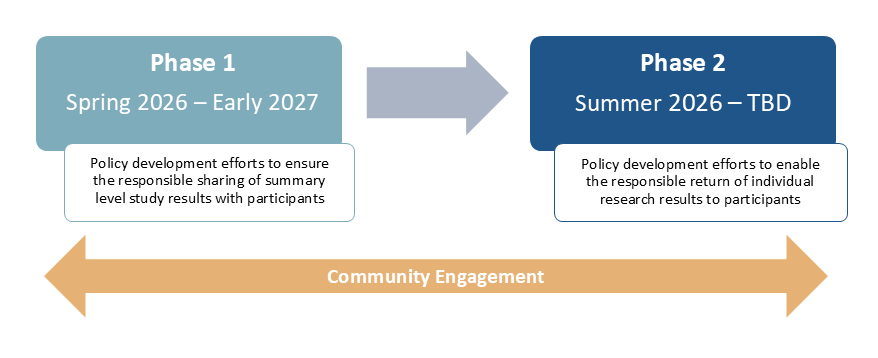
OSP is embarking on a two-phase policy development process that will directly engage the community.
- Phase 1: This phase aims to build upon previous efforts and existing best practices to develop a policy to ensure the responsible sharing of summary level study results with participants (Spring 2026 – Early 2027). More information on Phase 1 can be found here.
- Phase 2: Informed by the outcomes and lessons from Phase 1, this phase aims to develop a policy to enable the responsible return of individual research results directly to participants (Summer 2026 – TBD).
Draft NIH Policy on Sharing Summary Level Study Results with Clinical Research Participants
Summary level study results, also commonly known as aggregate research results, are concise overviews of a study, that include objectives, methodology, and cumulative findings. These summary level study results are presented in plain language that is understandable, meaningful, accessible, and appropriate. Sharing these results is a recognized best practice that enhances transparency, demonstrates respect for participants’ contributions, and fosters trust in clinical research. By responsibly sharing study results in plain language, researchers can strengthen relationships and partnerships with research participants.
Draft NIH Policy on Sharing Summary Level Study Results with Clinical Research Participants
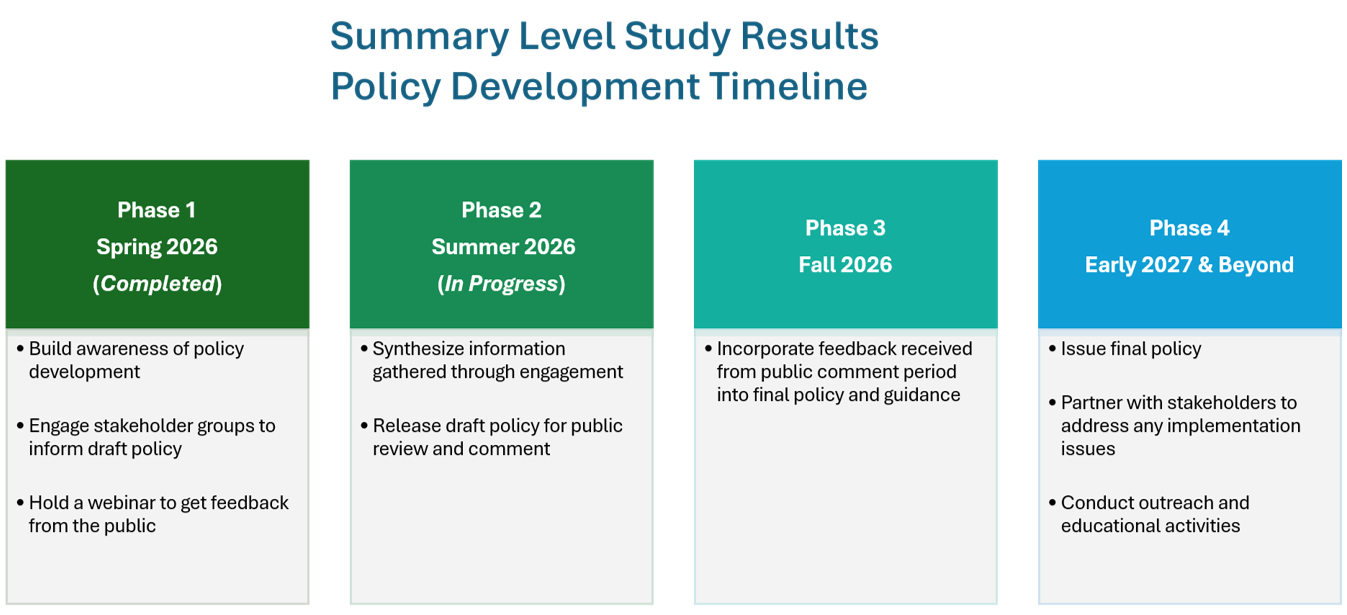
In Spring 2026, NIH began a comprehensive policy development process to establish requirements for researchers and institutions to responsibly share summary level study results with research participants in plain language for all NIH-funded clinical research. This involved hosting a public webinar and inviting on-demand commenting to inform the draft policy.
On August 27, 2026, NIH released its Draft NIH Policy on Sharing Summary Level Study Results with Clinical Research Participants for public comment. Comments on the Draft Policy will be accepted until October 26, 2026, and must be submitted through the form below.
- Draft NIH Policy on Sharing Summary Level Study Results with Clinical Research Participants
- Comment Form
For more information on the timeline for the Draft Policy, please see below.
Returning Individual Research Results to Participants
Individual research results include participant-specific findings, such as personal lab results or health information. These are different from summary level study results, which provide an overview of collective study findings. Individual research results offer participants information about their own data generated through their participation in research. Returning individual research results can support participants in understanding their personal information and may inform their own health decisions. Additionally, returning individual research results strengthens partnerships between the researcher community and participants by considering participants as partners in advancing scientific knowledge.
A National Academies of Sciences, Engineering, and Medicine (NASEM) report Returning Individual Research Results to Participants, co-sponsored by NIH, examined evidence on the benefits, harms, and costs of returning individual research results. It also considered the ethical, societal, regulatory, and operational issues related to the return of an individual’s research results in the context of human biospecimens research. As a result of this study, various NIH programs and initiatives have moved towards a more participatory model of returning individual research results to participants. However, this occurs inconsistently across clinical research generally.
NIH is committed to working with the public to enable an environment that is appropriate and conducive to allowing greater return of individual research results. More information is coming soon about the policy development process and engagement opportunities related to returning individual research results.
Developing Evidence to Enable Responsible Return: OSP/NIEHS/NHGRI Effort
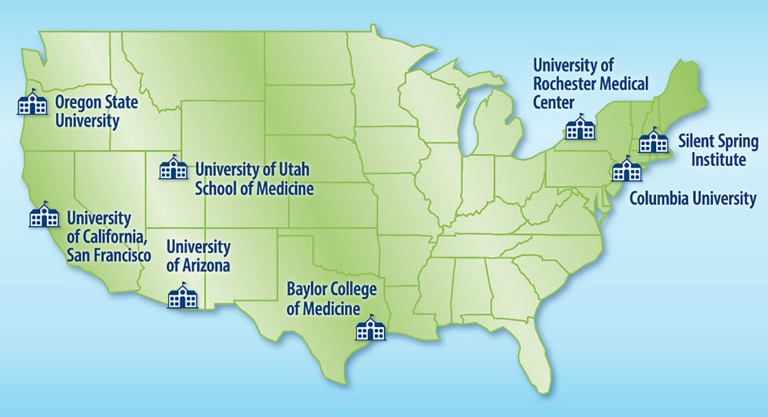
In 2024, OSP, in partnership with the National Institute of Environmental Health Sciences (NIEHS) and the National Human Genome Research Institute (NHGRI), hosted a kickoff meeting for recipients of NIH grants focused on charting a responsible path forward for reporting back environmental health and non-genomic research results. Researchers from across the country presented on their awarded projects, all aimed at informing and developing guidelines, educational resources, and community engagement approaches for effective communication of research results.
Select Other NIH Efforts to Promote Responsible Return of Research Results
- All of Us Research Program
- Environmental influences on Childhood Health Outcomes (ECHO) Program
- National Human Genome Research Institute
- National Institute of Diabetes and Digestive and Kidney Diseases
Infographics for Communicating About Return of Research Results
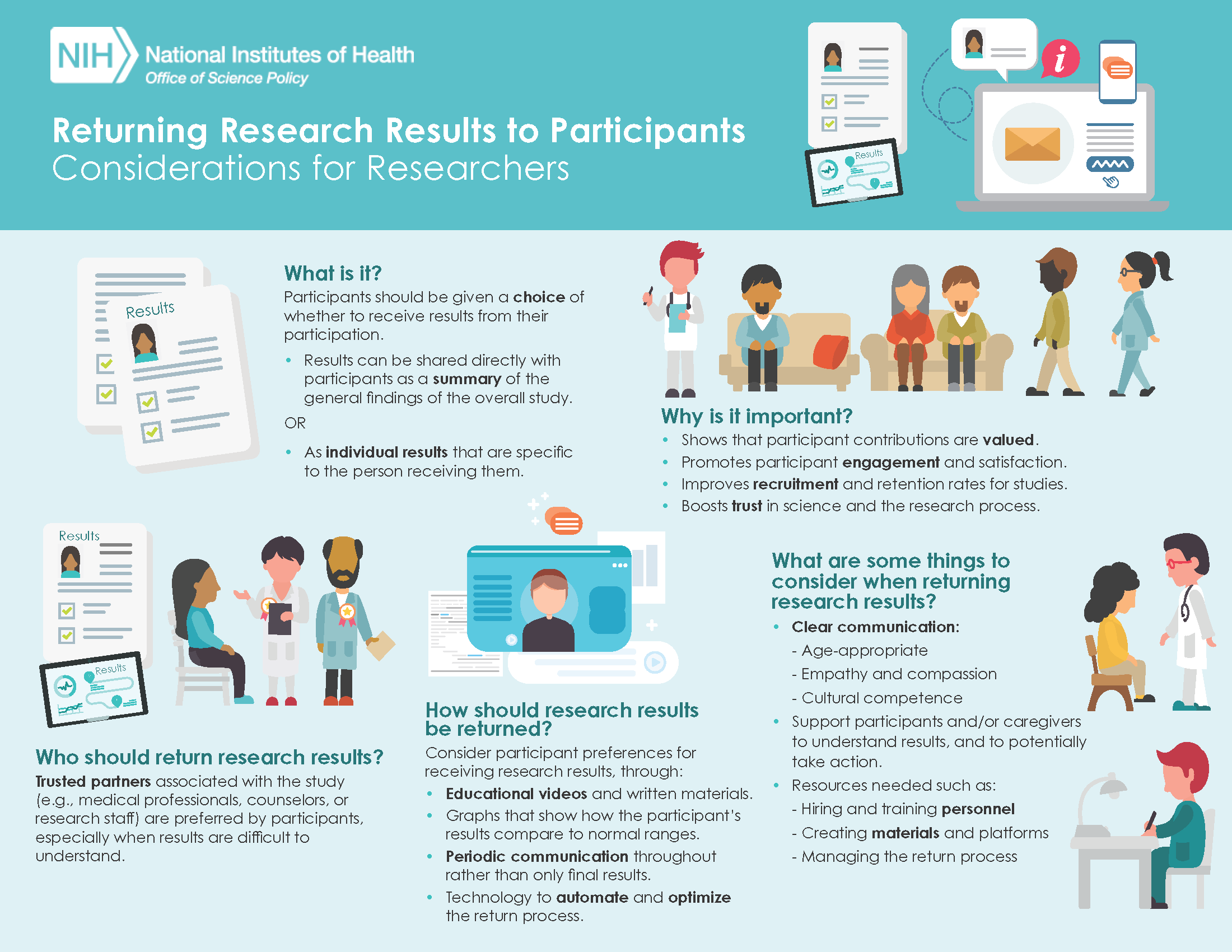
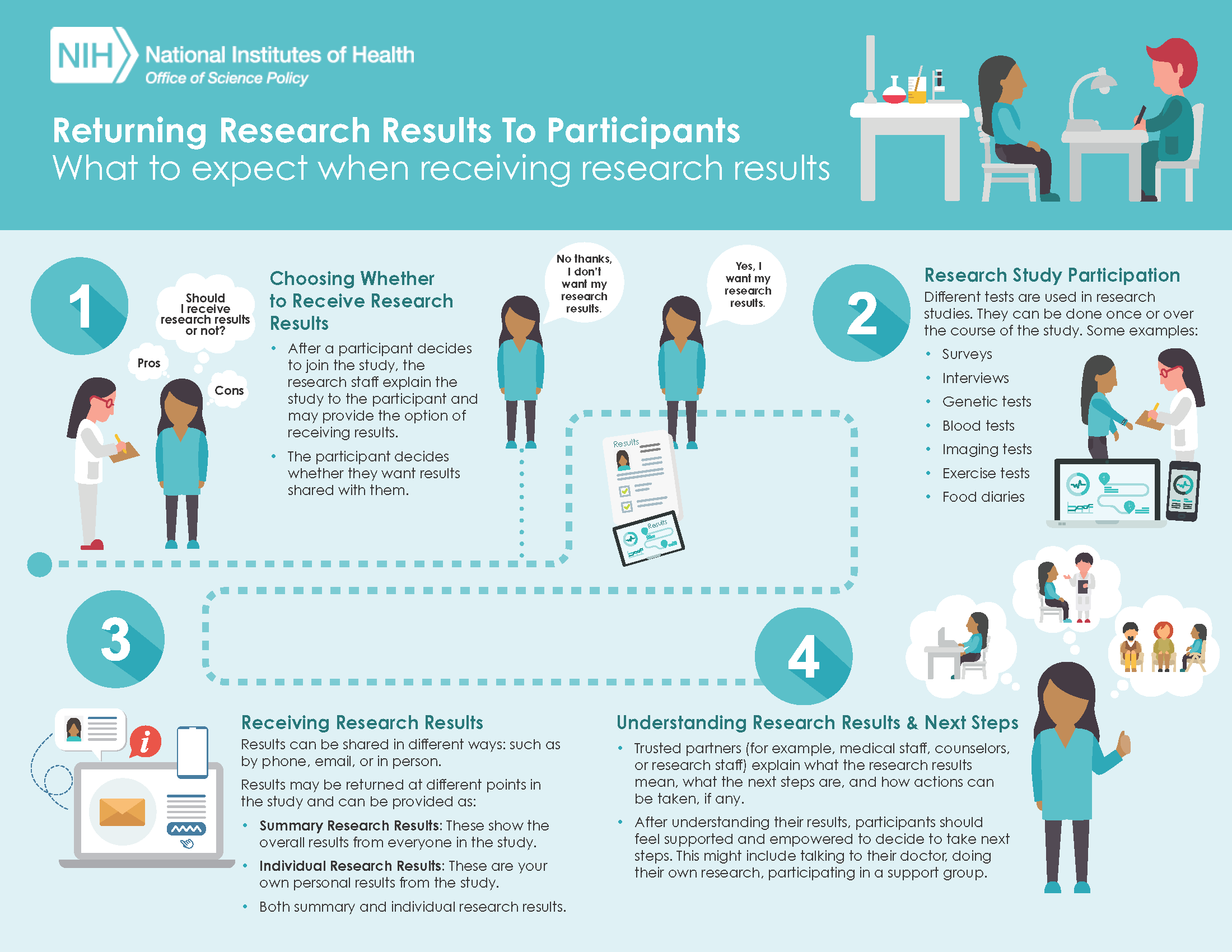
OSP created infographics to help communicate the concepts of returning research results. The first infographic displays what research participants can expect when participating in a study that provides them with the option to receive their research results. (click to enlarge)
The second infographic displays key considerations for researchers to think about when designing and conducting studies that plan to return research results to participants. These visual resources are intended to be used to help communicate these concepts in a way that’s more easily understood. (click to enlarge)